Wholesale Explained: Why B2B Marketplaces Won’t Get You More Doors
Outdoor gear is not a simple wholesale category.
A brand selling backpacks, camp lighting, water filtration, travel accessories, blankets, or technical equipment isn't necessarily dealing with the same wholesale challenges as a footwear or apparel brand. There may be fewer size and color combinations to manage, but that doesn't mean the business is simple.
Outdoor hard-good products can be technical, and buyers need education. New products don't always wait for the next traditional season. Specialty retailers still have close relationships with their sales reps. And perhaps most importantly, retailers don't all buy the same way.
Some want to log into a B2B platform and place the order themselves. Some work alongside a rep. Some want a spreadsheet they can fill out offline. Others may simply email a brand an Excel file with 25 SKUs and quantities and expect someone else to take it from there.
A B2B platform for an outdoor brand needs to be flexible enough to support all of those realities without adding unnecessary complexity.
That's where Envoy B2B fits.
Outdoor Gear Doesn't Sell Like Apparel Or Footwear
There are wholesale platforms where nearly every part of the buying experience is built around style, color, and size matrices. That makes sense when you're selling shoes or apparel.
Gear can work differently.
A backpack might have one SKU. A water filter could have a handful of configurations. A headlamp, camp stove, or travel accessory may be sold individually or by the case, but the retailer probably doesn't need to navigate a giant size run to place the order.
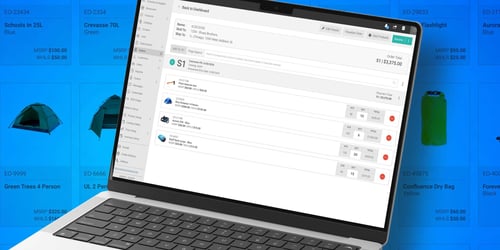
Envoy B2B supports both complex multi-SKU products and condensed single-SKU ordering, giving outdoor brands the ability to present products in a format that makes sense for what they actually sell. Buyers can see more products at once, understand what is available, and quickly enter quantities without clicking through unnecessary layers.
The goal is to make ordering feel easy for your retailers.
.png?width=1436&height=694&name=image%20(2).png)
Let Buyers Order The Way They Actually Buy
There's a tendency in B2B software to assume that the goal is to eliminate spreadsheets.
That's probably the wrong goal.
Plenty of buyers and sales reps are comfortable working in Excel. They might be sitting across the table during a line showing, working on an airplane, reviewing an assortment with several people internally, or simply following a purchasing process they've used for years.
If Excel works for them, forcing them into a different process doesn't necessarily improve the buying experience.
Envoy B2B takes a more practical approach.
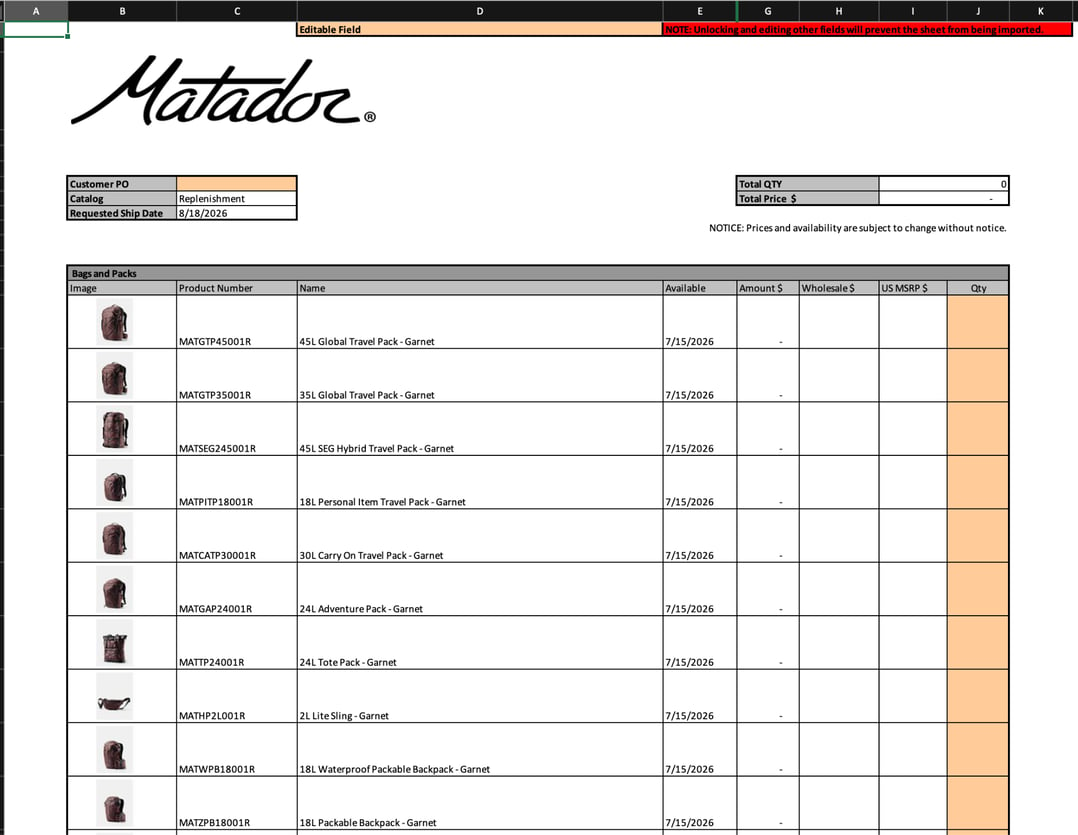
A user can generate an up-to-date Excel order form from Envoy B2B with the appropriate products, customer information, and pricing. The buyer or rep can work on that order offline and then import the completed file back into the platform without manually recreating it. Envoy B2B can also support workflows where SKU and quantity information is brought back into the ordering process rather than rekeyed line by line.
The Excel workflow continues to evolve, too. Envoy B2Ba's 2026 updates allow users to generate order forms based on product availability for a requested ship date, helping keep the offline version aligned with what can actually be ordered.
That can save a surprising amount of time.
Imagine a retailer emails a spreadsheet containing 25 products, each with different quantities. The old process might involve a rep or customer service person opening that spreadsheet, finding every SKU in an ERP or B2B system, and entering quantities one line at a time.
But there’s a better, simpler way: import it.
The point isn't to convince every retailer to stop using Excel. It's to eliminate the unnecessary work that happens after they do.
Outdoor Product Launches Don't Always Wait For The Next Season
Outdoor brands tend to innovate quickly. A new travel pack, lighting product, filtration system, camp accessory, or piece of technical equipment doesn't always make sense to hold for six months just because it missed a traditional seasonal launch window.
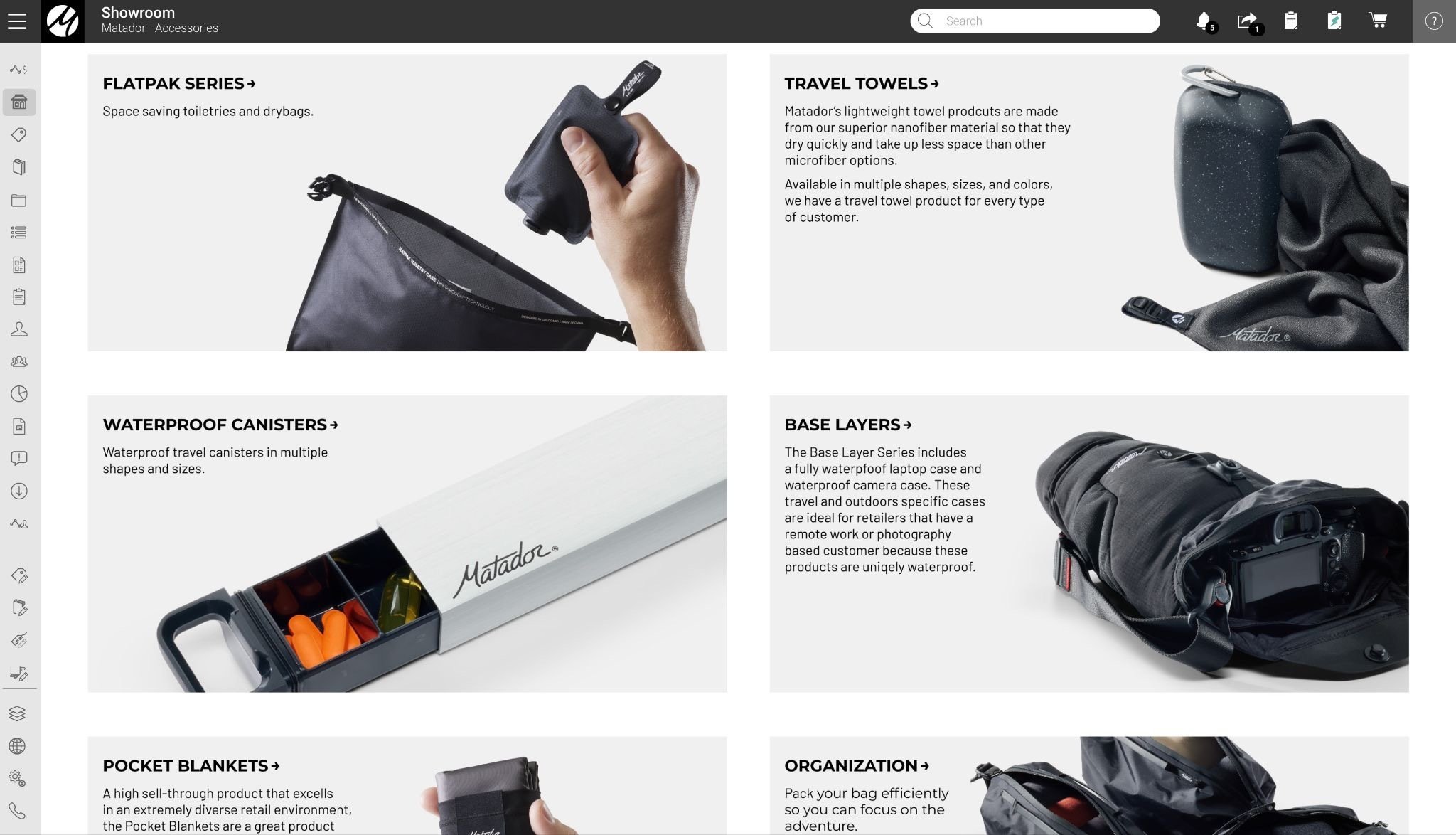
Matador Equipment is a good example. The company's product team was developing new gear quickly, but getting those products into wholesale was harder. Sales reps were spending time answering questions about available inventory, sending assets, and coordinating the details needed to support a launch.
That made it difficult for wholesale to move at the same speed as product development.
Envoy B2B gave Matador a central place to launch and showcase products, distribute assets, communicate available-to-sell inventory, and collect orders. Instead of waiting for reps to manually distribute all of that information, retailers could get what they needed directly.
That made midseason launches much more realistic.
As Matador's Nellie Stephenson explained:
"We've been able to accept a number of prebookings through the platform that we would have struggled to coordinate otherwise."
That agility really matters for an outdoor brand. If the product is ready and retailers want it, the wholesale infrastructure shouldn't be the reason you have to wait until next season.
Technical Products Need More Than A SKU And A Price
Outdoor specialty retail is also different because the person buying or selling the product needs to understand why it exists, how it will be used, and how to sell it.
Consider a water filtration product. The retailer may need to understand filtration performance, capacity, weight, intended use, replacement components, maintenance, and how one product differs from another.
A technical backpack could require information about volume, materials, torso fit, weather resistance, weight, organization, or the type of trip it was designed for.
Inevitably, a customer walking into a specialty store is going to ask product questions, and the retailer needs to be able to answer them.
That's why a wholesale B2B platform for outdoor brands shouldn't just be a place to transact.
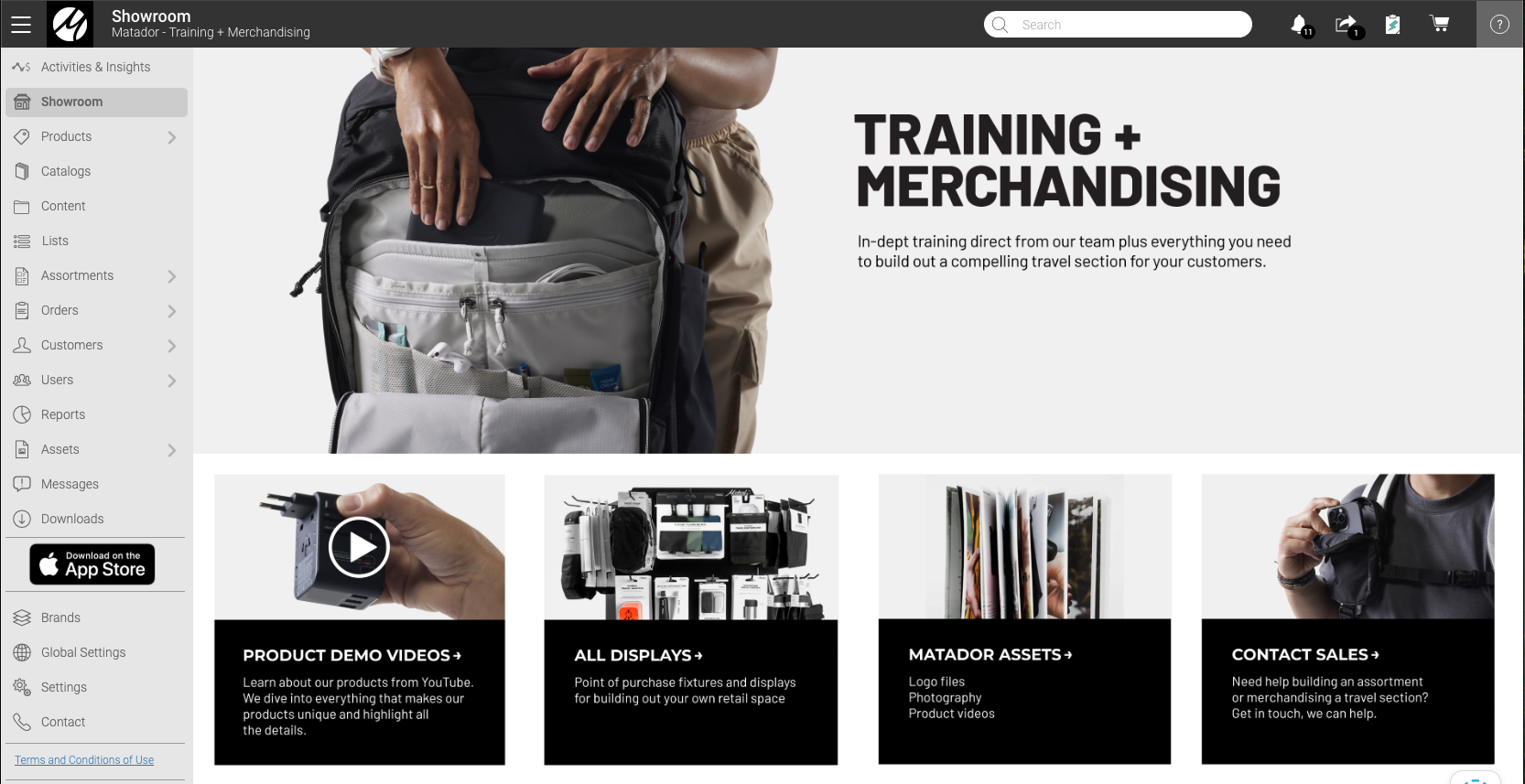
LifeStraw uses Envoy B2B to bring product information, high-quality assets, inventory, ordering, shipment information, and account information together for retailers. Their buyers can learn about a product and access the materials they need without digging through old emails, Dropbox folders, separate PDFs, and the consumer website.
That has an impact beyond convenience.
When product information is easier to access, a retailer can become more knowledgeable about the products they're putting on the shelf. The brand's reps can spend less time locating files and answering routine questions and more time helping accounts merchandise and sell.
Your Digital Catalog Shouldn't Be Outdated The Day After You Publish It
The ability to launch products outside of traditional seasons creates another problem: keeping sales materials current.
A beautifully designed PDF or Canva catalog can look great when it is published. But nothing is ever static. A price changes here. A colorway is added there. An image gets updated. A delivery window shifts. A new product launches in the middle of the season. What happens to that catalog when these inevitable changes happen?
Now your brand has to decide whether to recreate the catalog, distribute another version, or allow reps and retailers to keep working with something that may no longer be accurate.
Envoy's B2B digital catalog tools approach the problem differently.
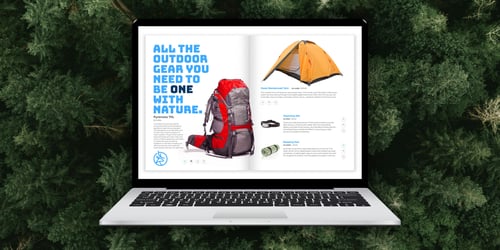
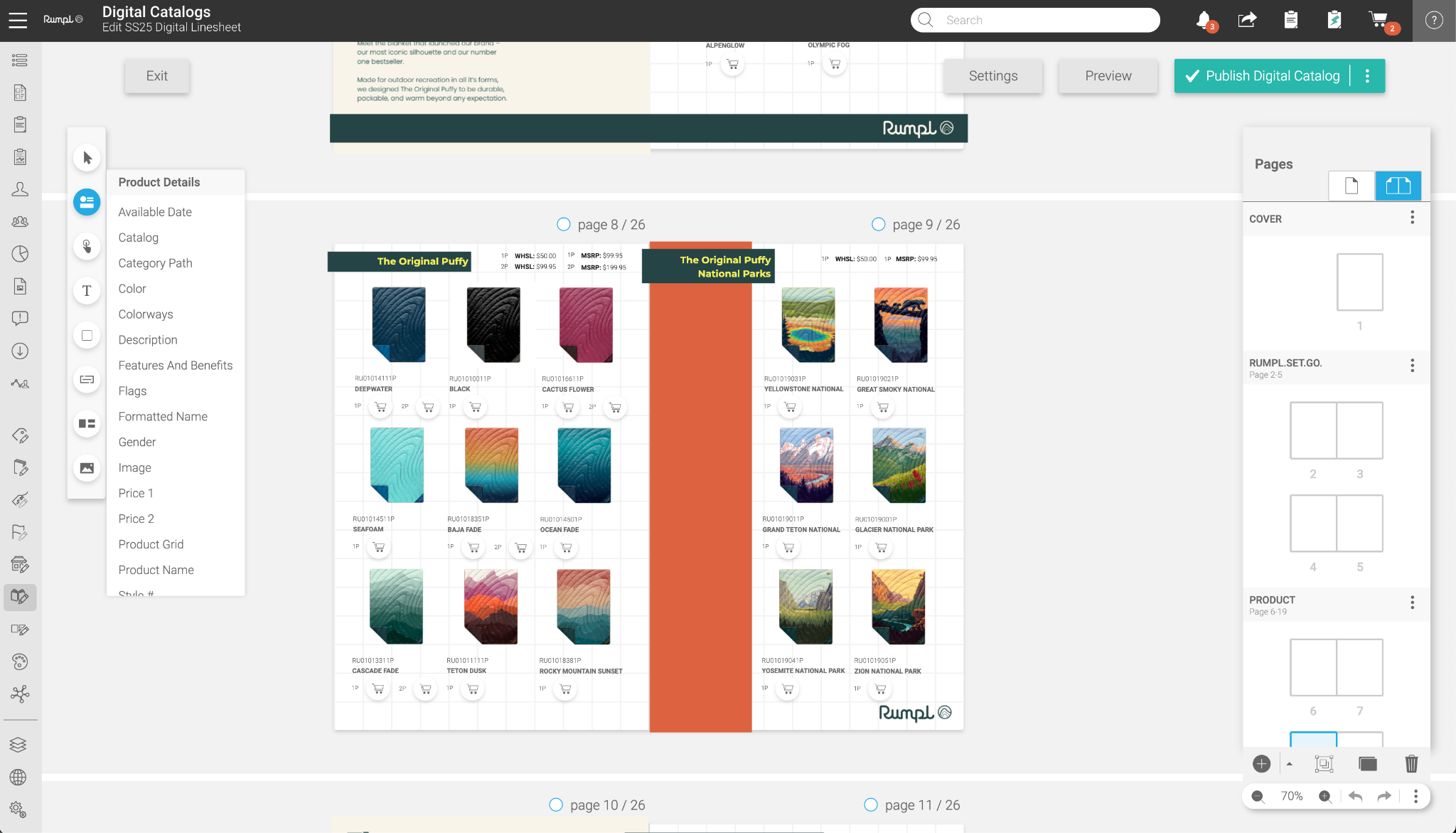
Because the catalog experience is connected to the B2B and its underlying product information, brands can build sales materials around current products, pricing, imagery, and availability instead of maintaining a completely disconnected document. Envoy's digital content tools are designed to use information from the B2B so updates don't require rebuilding every sales asset from scratch.
That's especially valuable for outdoor brands with a steady stream of new products.
If you launch something in July, you shouldn't have to recreate everything your reps have been using since January just to put the new product in front of retailers.
Update the product data. Update the experience. Most importantly… keep selling.
Self-Service Should Make Sales Reps More Valuable, Not Less Important
Obviously, transactions need to occur, but specialty outdoor is ultimately about relationships.
You can see that clearly at events like Grassroots Outdoor Alliance Connect. Its buying shows are built around scheduled meetings between retailers, brands, and sales reps. The Spring 2026 show was scheduled to include more than 10,000 appointments between brands and retailers, with the primary event centered around line showings and business conversations.
Technology shouldn't try to replace that. But it can replace the low-value administrative work surrounding those relationships. A retailer shouldn't need to call a rep just to find an image. They shouldn't have to send an email asking whether something is in stock. They shouldn't need someone at the brand to look up tracking information, resend a price sheet, or manually enter every replenishment order.
Give retailers the ability to handle those things themselves, and the rep becomes more valuable, not less.
Now the conversation can be about the assortment. What's selling. What belongs in the store. What product needs more education. What's launching next. What the buyer should reorder. The parts of the relationship that matter, and drive success.
BioLite saw that benefit early in its use of Envoy B2B. As Jonathan Kosakow explained:
"Any time you can simplify the ordering process and provide retailers with a greater knowledge of why your product is superior, it's a win-win."
That's the balance outdoor brands need. Great self-service when a retailer wants it, and a great sales rep when that retailer needs strong support.
Built Around The Reality Of Outdoor Wholesale
The best B2B system isn't necessarily the one with the most complicated workflow, it's the one people actually want to use.
For outdoor brands, that means giving a buyer an easy path to find products, understand them, check availability, and place an order. It’s reps and retailers collaborating to build an order.
It means supporting prebook orders when products need to be committed in advance, quick replenishment when something is moving in stores, and fast product launches when innovation doesn't line up neatly with the seasonal calendar.
And it means keeping product content, pricing, inventory, assets, catalogs, orders, and account information connected enough that the wholesale team isn't constantly moving information between systems.
Envoy B2B was built around those real-world wholesale demands and workflows.
That's why outdoor brands including BioLite, LifeStraw, Matador Equipment, Rumpl, Topo Designs, Brunton, and others use Envoy B2B to support their wholesale channels. Envoy B2B's current outdoor offering is specifically designed to support hard-goods workflows including single and multi-SKU products, case packs, catalogs, prebook and replenishment ordering, real-time inventory, and retailer and rep ordering experiences.
Outdoor wholesale doesn't need to work exactly like apparel wholesale. It doesn't need to work exactly like e-commerce either. It needs to work the way outdoor brands, reps, and specialty retailers actually do business.
That's the part Envoy B2B gets right.