
Wholesale Explained: Why B2B Marketplaces Won’t Get You More Doors
Your B2B e-commerce system should empower growth—not create bottlenecks. Yet many wholesale footwear brands find themselves wrestling with outdated platforms that frustrate retailers, drain team resources, and miss critical sales opportunities. The complexity of footwear wholesale—with size matrices, seasonal pre-books, and SKU variations—demands more than a basic ordering system.
If your team is constantly firefighting B2B platform issues, manually updating catalogs, or hearing complaints from retailers about your ordering process, you're not alone. These are telltale signs that your current B2B system can't keep pace with your business. In this guide, we'll explore seven warning signs that it's time to upgrade to a modern wholesale ordering platform—and what to do about it.
Sign #1: Retailers Complain About Your Ordering Process
Retailer Satisfaction Indicators
When retailers start voicing frustration about placing orders, it's not just feedback—it's a red flag. Confusing navigation, slow load times, and clunky size selections turn what should be a quick reorder into a time-consuming headache. The result? Retailers order less frequently, reduce basket sizes, or worse, turn to competitors with smoother experiences.
Today's buyers expect consumer-grade experiences in B2B transactions. They want modern wholesale ordering platforms with always-on portals that make ordering intuitive and fast. When your system creates friction, you're not just losing individual orders—you're eroding the retailer relationships that fuel your wholesale channel.
Top retailer complaints about outdated B2B systems:
- Confusing product navigation and search functionality
- Slow page loads and system timeouts during ordering
- Difficult or impossible size matrix selection
- No real-time inventory visibility
- Poor or non-existent mobile experience
If ordering is hard, retailers simply won’t reorder. The fix? A retailer-friendly platform with intuitive interfaces, mobile accessibility, and real-time inventory visibility. Your retailers shouldn't need a training manual to place an order—and with modern B2B systems, they don't.
Sign #2: You're Manually Updating Catalogs
Catalog Management Pain Points
If your team spends hours updating PDFs, Excel spreadsheets, or static web pages every time you launch a new collection, you're bleeding time and money. Manual catalog management creates version control nightmares—reps work from outdated pricing, retailers see discontinued products, and new launches get delayed because someone forgot to update the file.
The opportunity cost is real. While your team wrestles with catalog updates, competitors with modern B2B ordering platforms push new products live in minutes, not days. Their retailers see fresh inventory immediately, while yours are still looking at last season's lineup.
Manual Catalog Management vs. Modern B2B Platform
|
Manual Catalog Management |
Modern B2B Platform |
|
Hours per update |
Minutes per update |
|
Version control chaos |
Single source of truth |
|
Static PDFs |
Interactive digital catalogs |
|
Limited customization |
Account-specific content |
|
No engagement tracking |
Content performance analytics |
Modern platforms like Envoy B2B's Digital Press content studio let you build and customize digital catalogs with fullscreen whiteboard presentations for line planning. Updates happen in real-time across all touchpoints—your reps, retailers, and internal team all see the same current information. Plus, you can create customizable workbooks for different retailer segments, ensuring each account sees the most relevant products.
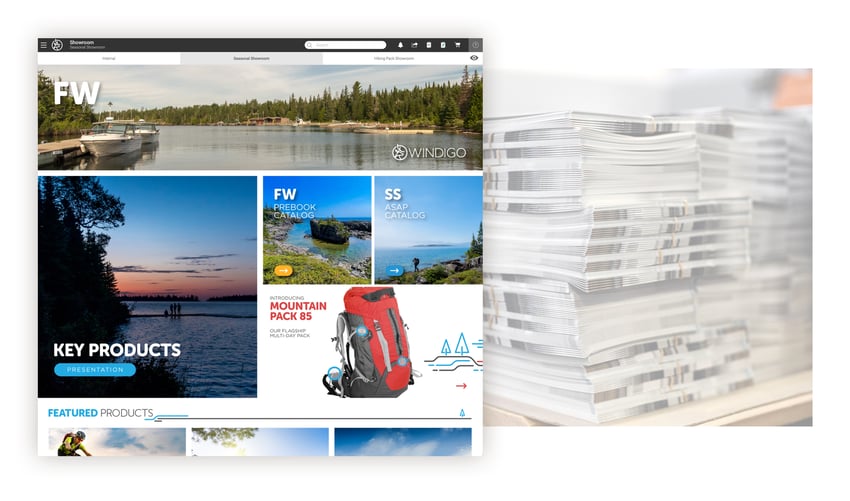 Beyond efficiency, digital catalogs offer a sustainable alternative to printed materials—better for your budget and the planet.
Sign #3: Inventory Oversells Are Common
Nothing damages retailer trust faster than overselling inventory. When a retailer places an order only to learn days later that half their SKUs are out of stock, it creates a domino effect of problems: emergency production runs, expedited shipping costs, or worse—cancelled orders and damaged relationships.
The root cause? Lack of real-time inventory synchronization between your ERP system and ordering platform. When systems don't talk to each other, your team is flying blind, and retailers pay the price.
The true cost of inventory oversells:
- Damaged retailer relationships – Trust erodes with every oversell incident
- Emergency production runs – Rush orders kill your margins
- Lost margin on expedited shipping – Eating shipping costs to fix mistakes
- Customer service time drain – Hours spent apologizing and problem-solving
- Brand reputation damage – Word spreads fast in wholesale communities
Modern footwear brand's B2B e-commerce platforms integrate directly with ERP systems like NetSuite, SAP, and Shopify to provide real-time inventory synchronization. This means size-level inventory visibility—critical for footwear—so retailers know exactly what's available before they order. Automated low-stock alerts keep your team proactive instead of reactive.
Sign #4: Size Run Ordering Is Chaotic
Size Matrix Complexity
Footwear and apparel brands face a unique challenge in wholesale: size runs and other variables across a single product. Managing width variations, color-size combinations, and retailer-specific size curves manually is a recipe for errors, returns, and frustrated buyers. When retailers struggle with clunky size and variation selection tools—or worse, have to email or call in size runs—you're adding unnecessary friction to the buying process.
Manual size matrix ordering leads to mistakes: wrong sizes shipped, incorrect quantities, and retailers receiving inventory they can't sell. These errors cost you in returns, restocking fees, and damaged relationships.
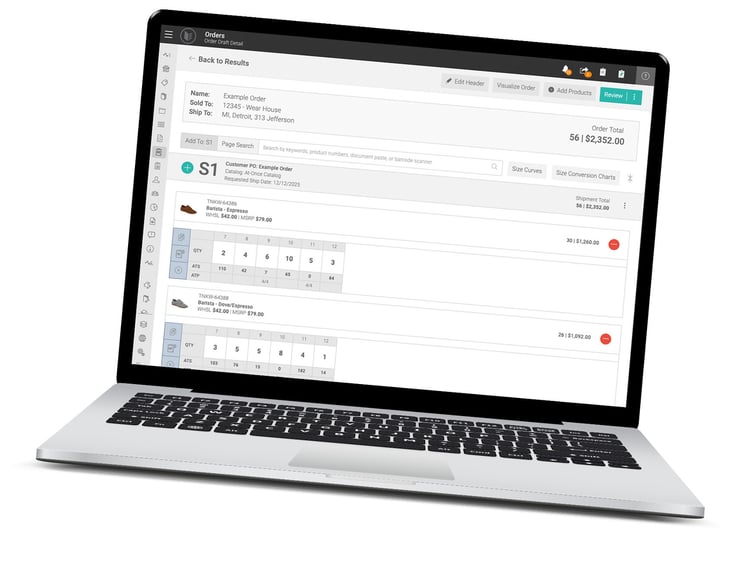
Size matrix must-haves for footwear brands:
- Visual size grid selection – Click-to-fill interface for easy ordering
- Quick-fill by size curve – Pre-set size distributions for faster ordering
- Copy previous order size runs – Repeat successful orders with one click
- Size availability in real-time – See stock levels at the size level
- Easy replenishment workflows – Reorder based on past performance
Modern platforms offer pre-book order capture with intuitive size matrices, offline Excel import for bulk orders, and the ability to save account-specific size preferences. When size run ordering is seamless, retailers order more confidently—and more frequently.
Sign #5: Mobile Ordering Is Impossible
Mobile Traffic Statistics
Every rep has a phone, and for many of them it’s become their primary device to work on, replacing their desktops and laptops. Whether it's a rep capturing an order during a store visit or a retailer placing a quick reorder from their phone, mobile accessibility isn't a nice-to-have—it's table stakes. If your B2B system is desktop-only, you're missing sales every single day.
Browser-only systems tie reps to their laptops, slow response times to retailer needs, and create missed opportunities during in-person meetings. Meanwhile, competitors with mobile-first platforms capture orders anywhere, anytime.
Desktop-Only Systems:
- Reps tied to office/laptop for order entry
- Slow response to retailer needs and questions
- Missed in-person order opportunities at trade shows and store visits
- Poor user experience leads to abandoned orders
Mobile-First Platforms:
- Order anywhere, anytime—store visits, trade shows, after hours
- Real-time rep responsiveness to retailer questions
- Capture orders during store visits while products are top-of-mind
- Seamless mobile experience drives higher engagement
Modern wholesale ordering platforms offer mobile-first e-commerce and content apps, with digital catalogs and assortments, virtual showrooms, interactive products, and even offline ordering capability for trade shows or areas with poor connectivity. Rep performance monitoring on mobile keeps your team accountable and informed, no matter where they're working.
Sign #6: You Can't Track Retailer Behavior
Analytics Gaps
Insights into retailer activity is a key component in seasonal growth. Without visibility into retailer behavior, you miss critical opportunities to engage retailers and guide them throughout the season. That ability to see retail activity and step in with support is what will lead to stronger partnerships, with bigger and better orders, at a higher volume.
Legacy systems offer little to no analytics—maybe basic order history if you're lucky. But modern footwear brand's B2B e-commerce platforms provide real-time account insights that turn data into action.
Critical analytics you're missing without a modern platform:
- Customer engagement metrics – Who's active, who's going quiet
- Top-performing content – Which products and catalogs drive interest
- Showroom view tracking – What retailers are browsing but not buying
- Order volume trends – Spot growth opportunities and declining accounts
- Product interest signals – See what's getting attention before orders come in
- Cart abandonment data – Understand where and why orders stall
Real-time Insights Turn Data Into Action
With built-in tracking and analytics tools, you can monitor content performance, access account insights dashboards, and receive assortment and order recommendations based on actual data. Rep performance monitoring helps you coach your team with facts, not guesses. When you know what's working—and what's not—you can optimize your wholesale strategy with confidence.
Sign #7: Integration Is Manual Or Non-Existent
ERP Integration Requirements
Manual data entry between your B2B platform and ERP system isn't just tedious—it's expensive and error-prone. When your team spends hours copying orders, updating inventory, and reconciling data across disconnected systems, they're not focused on growth. They're stuck in administrative quicksand.
Consider this: brands using legacy systems reported manual order entry taking 30 minutes per order. After implementing modern B2B platforms with turnkey ERP integration, that time dropped to minutes—freeing teams to focus on marketing, sales, and strategic initiatives instead of data entry.
Disconnected systems create version-of-truth problems: your ERP says one thing, your B2B platform says another, and your team wastes time figuring out which is correct. Modern B2B ordering platforms should deliver dynamic integrations with every common ERP like SAP, Netsuite, Infor, or any of the frequently used ERP systems.
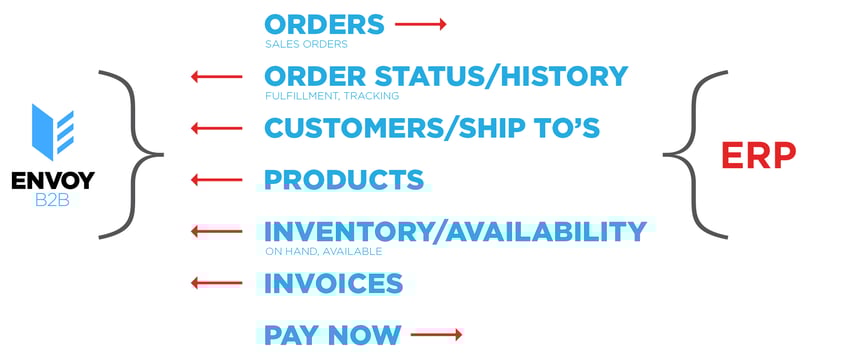
A rock-solid integration means reduced manual work, fewer errors, and teams that can shift focus from data entry to revenue-driving activities. Integration isn't a luxury—it's a necessity for brands serious about scaling efficiently.
What To Do Next
If you recognized your business in three or more of these signs, it's time to take action. The cost of inaction is real: lost revenue from frustrated retailers, team burnout from manual workarounds, and competitive disadvantage as other brands modernize their wholesale channels.
Start with an honest audit of your current system against these seven warning signs. Then consider what a modern wholesale ordering platform could unlock for your business:
What to look for in your next platform:
- Footwear-specific features – Size matrices, SKU complexity management, color-size grids
- Mobile-first architecture – Seamless ordering from any device, anywhere
- Real-time ERP integration – Turnkey connections with NetSuite, SAP, Xorosoft, or other ERP’s commonly used by footwear brands.
- Retailer-friendly interface – Intuitive ordering that requires zero training
- Analytics and insights – Real-time visibility into retailer behavior and content performance
- Implementation support and training – Personalized onboarding and customer success
- Proven track record in footwear/apparel – Experience with your industry's unique needs
Don't wait until retailer churn accelerates or your team reaches breaking point. Modern platforms pay for themselves through efficiency gains, reduced errors, and increased order frequency. With strong implementation support, the transition can be smooth and strategic—not disruptive.
Ready To Transform Your Wholesale Channel?
Envoy B2B specializes in B2B e-commerce, for footwear, apparel, and accessories brands, helping companies like yours support retailer partners with intuitive ordering, real-time inventory, mobile-first experiences, and seamless ERP integration. With over $10 billion in transactions processed across 35 countries, we understand the unique complexity of footwear wholesale.
Our platform includes everything you need: pre-book order capture with size matrices, Digital Press content studio for customizable catalogs, mobile-first ordering, real-time account insights, and turnkey integration with NetSuite, SAP, and Shopify.
Schedule a Demo | Contact Sales: sales@envoyB2B.com | 844.462.7776
Click here to learn more about Envoy B2B!
Your B2B e-commerce system should be a competitive advantage, not a liability. If you recognized your business in three or more of these signs, it's time to explore modern wholesale ordering platform solutions designed specifically for the complexity of footwear wholesale. The right B2B platform empowers your team, delights your retailers, and scales with your growth—turning your wholesale channel into a strategic driver of revenue. The question isn't whether to upgrade, but how soon you can start.