Wholesale Explained: Why B2B Marketplaces Won’t Get You More Doors
Here's a fun fact that'll make your sales team wince: the vast majority of B2B buyers now expect the same seamless experience they get ordering takeout at 2 AM. The B2B e-commerce trends reshaping wholesale in 2025 aren't really about the future—they're about catching up to what retailers already expect today.
Your retail partners have been spoiled. They can order groceries with three taps, track packages in real-time, and return items without talking to a human. Now they're wondering why placing a wholesale order feels like filing taxes with a fax machine.
The stakes? Brands clinging to legacy systems are watching retailers quietly shift their business to competitors who actually get it. The good news: the gap between "we've always done it this way" and "holy cow, this is easy" isn't as wide as you think.
Let's dig into what's actually changing—and why your retailers will thank you for paying attention.
The State of B2B e-commerce in 2025
Does anyone remember when “digital transformation” was just a buzz word? There was a lot of skepticism around the idea. Well, plot twist, that buzzword became a reality. And if you weren’t paying attention, you might have missed the moment where retailer expectations completely flipped as a result..
The wholesale brands still relying on PDF catalogs, email orders, and "just call us" aren't charmingly old-school anymore—they're leaving money on the table. B2B e-commerce continues to grow at a rapid pace, with digital channels claiming an increasingly significant share of wholesale transactions.
But here's what the stats don't capture: retailers don't just want digital ordering—they want to order on their schedule, from any device, with full visibility. They want the same experience they get in their personal lives when they buy online - fast, easy, and confident.
|
Aspect |
2020 |
2025 |
|
Catalog Management |
Manual PDFs updated quarterly |
Real-time digital catalogs with automated segmentation |
|
Order Placement |
Phone calls and email during business hours |
24/7 mobile ordering from anywhere |
|
Inventory Visibility |
"Let me check and get back to you" |
Real-time stock levels synced with ERP |
|
Pricing |
Manual updates by customer tier |
Automated personalized pricing by segment |
|
Integration |
Re-keying orders into multiple systems |
Seamless ERP integration with pre-book capability |
The brands winning right now? They stopped asking "Do we really need this?" and started asking "Why are we making our retailers work this hard?"
Trend #1: Mobile-First B2B Ordering
Consumer-Grade UX Expectations
Let's be honest: if your B2B platform looks like it was designed in the era of flip phones, you've got a problem. Mobile commerce has become a dominant force in e-commerce (Check out the statistics here and here), and your retailers got that memo.
They're placing orders from trade show floors, warehouse back offices, and yes, probably while waiting in line for coffee. If your platform requires them to squint at tiny buttons or pinch-zoom to read product names, they're not thinking "I'll do this later at my desk." They're thinking "Maybe I'll check out what the competition has to offer."
What mobile-first actually means:
- Responsive design that actually works – Not just "technically it works,” but genuinely easy to use with your thumbs on a mobile device
- Simplified checkout flows – Three taps, not thirty
- Quick reorder functionality – Because nobody wants to rebuild their cart from scratch
- Offline capability for trade shows – Spotty convention center WiFi shouldn't kill your sales
Here's the thing: retailers aren't asking for mobile ordering as a nice-to-have feature anymore. It's table stakes. Brands without mobile-optimized platforms are literally losing sales because retailers need to order on their own schedule—and that schedule doesn't always allow buyers to sit at a desktop computer.
Learn more about mobile-first B2B platform features.
[IMAGE: Retailer using tablet at trade show to place wholesale order] Alt text: Mobile-first B2B e-commerce platform for wholesale ordering
Trend #2: Real-Time ERP Integration
What's worse than telling a retailer you're out of stock? Telling them you're out of stock after they've placed an order, allocated shelf space, and maybe even presold the product to their customers. Congratulations, you've just become their least favorite supplier.
Retailers NEED an accurate window into your inventory if they're going to trust your ordering process. Real-time ERP integration might sound like a boring collection of words, but it means retailers can trust your numbers, and don’t have to jump through hoops to get there. And that’s exciting for them.
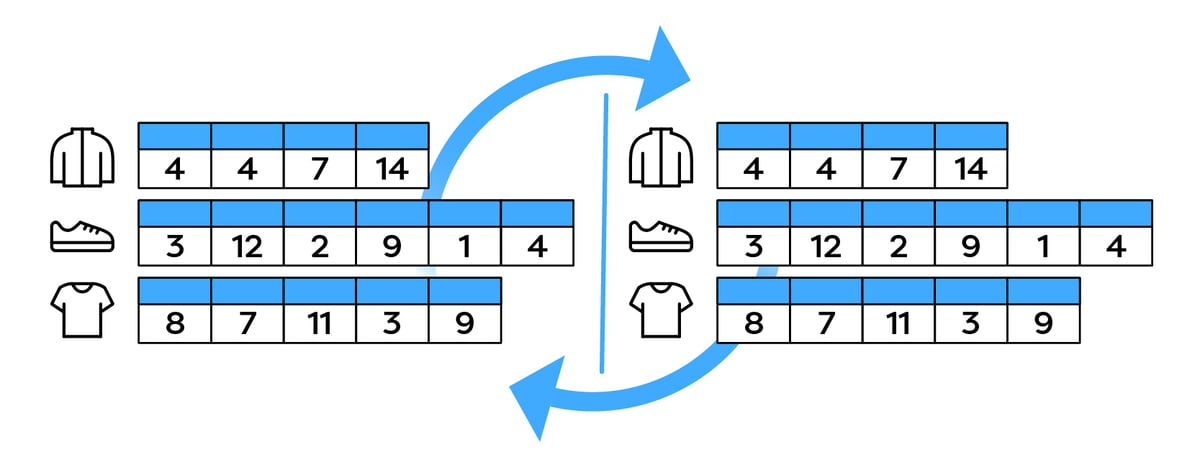
A real-time inventory sync across multiple systems builds trust with your retailers.
The painful reality: Brands juggling NetSuite, SAP, Oracle, or specialized apparel ERPs without proper integration spend hours manually updating inventory. Then they deal with oversells. Then they field angry retailer calls. Then they wonder why orders are down. (Spoiler: it's because retailers can't trust you.)
When retailers can't trust your inventory numbers, they'll find a brand they can trust.
|
Factor |
Manual Integration |
Automated Real-Time Integration |
|
Update Frequency |
Hours or days behind |
Instant synchronization |
|
Error Rate |
High (human data entry) |
Minimal (automated sync) |
|
Oversells |
Frequent and frustrating |
Virtually eliminated |
|
Pre-Book Management |
Clunky spreadsheets |
Seamless future inventory allocation |
|
Retailer Confidence |
"Let me call to confirm..." |
"I can see it's in stock" |
|
Staff Time |
Hours per week on updates |
Automated—time spent on strategy |
Signs your ERP integration is holding you back:
- Frequent inventory oversells that damage retailer relationships
- Manual catalog updates eating up hours every week
- Constant retailer complaints about outdated information
- Zero visibility into future inventory for pre-book orders
- Your team dreading every product launch because of the update nightmare
Modern digital wholesale e-commerce platforms handle this integration as a turnkey solution. Real-time sync means what retailers see is what they get. Pre-book functionality tied to future inventory? Built in. Your sanity? Restored.
Explore Envoy's ERP integration capabilities.
Trend #3: Personalized B2B Experiences
Custom Catalogs and Segmentation
Here's a scenario that might sound familiar: You've got premium boutiques, big-box retailers, and regional chains all buying from you. They need different products, different pricing, and different minimums. So naturally, you spend considerable time manually updating spreadsheets and sending customized PDFs, right?
There's a better way, and it doesn't involve sacrificing time that could be better spent growing your brand.
The personalization problem: Manually segmenting catalogs by price levels and retailer types is error-prone, slow, and scales about as well as a bicycle on the highway.
Modern B2B e-commerce strategy flips this script entirely. Platforms now automate catalog personalization based on retailer segments—different retailers see different products, pricing, and promotions based on their tier, all without you lifting a finger.
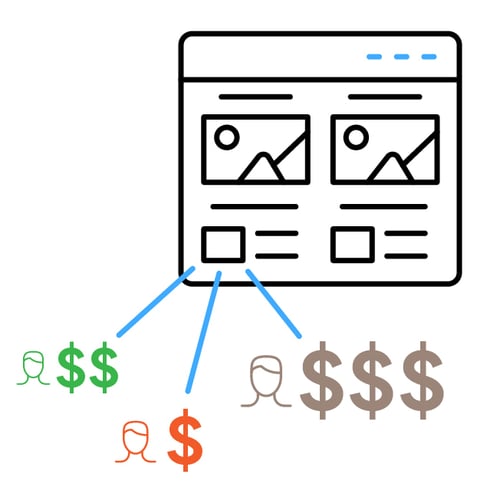 Personalized catalog segmentation in B2B e-commerce platforms
Personalization tactics that actually work:
- Automated catalog segmentation – Tier A boutiques see your premium line; Tier B retailers see core products; nobody sees the wrong thing
- Custom pricing tiers without manual updates – Price changes flow automatically to the right customer segments
- Targeted product collections – Footwear retailers see shoes; apparel retailers see clothing; everyone's happy
- Personalized order forms based on purchase history – "Here's what you ordered last season" beats "Start from scratch" every time
Self-Service Portals
Let's talk about a painful truth: every time a retailer has to email or call you to check order status, update their account, or find an invoice, that's potentially a sale that didn't happen. Because they're dealing with administrative busywork instead of, you know, ordering more products.
The lack of retailer self-service isn't just annoying—it's costing you revenue. Retailers want to browse, order, track shipments, and manage their accounts independently. They want to do it at 11 PM on a Tuesday if that's when they're doing their planning. They definitely don't want to wait until your business hours.
Essential self-service features:
- Order history and tracking – "Where's my stuff?" answered instantly
- Account management and payment options – Update addresses, payment methods, contact info without calling
- Downloadable invoices and statements – For their accountant who also works weird hours
- Easy reordering with saved carts – One click to reorder last season's bestsellers
- Real-time inventory visibility – No more "is this actually in stock?" guessing games
Retailers don't want to wait for business hours to place orders—they want to order when inspiration strikes.
This is where Envoy B2B's approach shines: building deep retailer relationships by giving them the tools to work independently. It's not about replacing your sales team—it's about freeing them up to focus on strategy and relationship-building instead of order status updates.
See how personalized portals strengthen retailer relationships.
Trend #4: Omnichannel Wholesale
Here's the thing about your retailers: they don't think in channels. They don't wake up and say, "Today I shall interact with my suppliers via exactly one touchpoint." They're messy, multitasking humans who start orders at trade shows, finish them on their phones, and expect their sales rep to know what they've been browsing.
Your retailers don't think in channels—they think in convenience. Your platform should too.
Omnichannel wholesale means seamless experiences across every touchpoint: trade shows, sales rep visits, online portals, mobile apps. An order started at a trade show booth gets completed online later. A sales rep visiting a retailer can see exactly what they've been looking at and what they ordered last quarter. Everything's connected because, well, that's how modern business works.
Omnichannel touchpoints that matter:
- Trade show ordering with offline capability – Spotty convention center Wi-Fi doesn't stop sales
- Sales rep-assisted ordering – Reps have full visibility into retailer behavior and preferences
- Independent retailer self-service – Browse and order without hand-holding
- Mobile ordering on the go – From the warehouse, the store floor, or the coffee shop
This is where Envoy B2B's positioning really hits: we're not building generic marketplaces where retailers are just transaction IDs. We're building tools that deepen retailer relationships through flexibility, collaboration, and convenience. Your sales team becomes more effective. Your retailers feel supported. Everyone wins.
Discover Envoy's omnichannel wholesale approach.
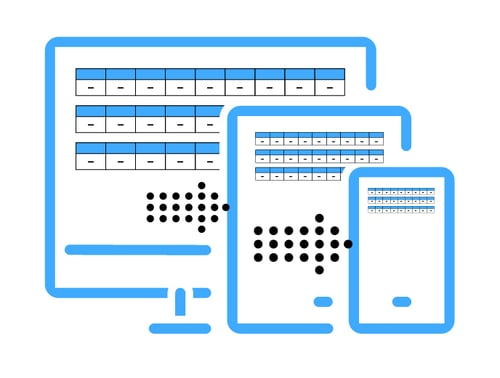 Omnichannel B2B e-commerce strategy across devices
Trend #5: Sustainability in B2B Commerce
Surprise! Your retailers care about sustainability, and not just because it's trendy. These are folks that opened outdoor shops because they’re passionate about the outdoors. They're fielding questions from their customers about sourcing, waste, and environmental impact. If you can't answer those questions, you're making their job harder.
The good news: digital B2B e-commerce trends naturally align with sustainability goals. Every PDF catalog you don't print is paper saved. Every accurate inventory sync is means you've reduced your chances of overproduction. Every transparent supply chain detail is trust earned.
How digital platforms support sustainability:
- Eliminate printed catalogs and paper order forms – Thousands of pages saved per season
- Reduce shipping errors through accurate inventory data – Fewer returns, less transportation waste
- Enable pre-book models that minimize overproduction – Order exactly what you need based on actual demand
- Provide transparency into product sourcing and materials – Retailers can confidently answer customer questions
This isn't greenwashing—it's operational efficiency that happens to be good for the planet. And when your retailers can tell their customers "We partner with brands committed to sustainable practices," you're not just a supplier anymore. You're an asset.
Dive into the research on sustainability in supply chain management.
How to Adapt Your B2B E-commerce Strategy
Alright, so you've read about all these B2B e-commerce trends and you're either excited, overwhelmed, or wondering if your current system is secretly from 2015. Let's figure out where you actually stand.
Audit time. Be honest—brutally honest—about your current platform:
- Are retailers complaining about your ordering process? (Even gentle "suggestions" count as complaints.)
- Are you manually updating catalogs and pricing? (If the answer involves spreadsheets and sighing, that's a yes.)
- Do you regularly oversell inventory because your system isn't synced with your ERP? (Apology emails don't count as a strategy.)
- Can retailers order from their phones without cursing? (Pinch-zooming is cursing-adjacent.)
- Do you have any analytics on retailer behavior? (Gut feelings don't count.)
The Build vs. Buy Decision Framework:
|
Factor |
DIY/Custom Development |
Modern B2B Platform |
|
Initial Cost |
High (development + infrastructure) |
Subscription-based, predictable |
|
Time to Launch |
12-18+ months |
8-12 weeks |
|
Ongoing Maintenance |
Your problem forever |
Platform handles updates |
|
Adaptation Speed |
Slow (requires dev resources) |
Fast (built-in flexibility) |
|
Integration |
Custom code for everything |
Turnkey ERP connections |
|
Scalability |
Rebuild as you grow |
Scales automatically |
|
Risk |
High (what if it doesn't work?) |
Lower (proven solutions) |
CHECKLIST: Is Your B2B Platform Ready for 2025?
☐ Mobile-optimized ordering experience (actually usable, not just "technically responsive")
☐ Real-time ERP integration (NetSuite, SAP, Oracle, or specialized systems)
☐ Automated catalog segmentation and personalization
☐ Retailer self-service portal with order tracking
☐ Analytics and behavior tracking (know what retailers are browsing and buying)
☐ Omnichannel ordering capability (trade shows, mobile, desktop, sales rep-assisted)
The brands adapting to these B2B e-commerce trends aren't necessarily the biggest or best-funded. They're the ones who looked at their retailer relationships and asked, "How can we make this easier?" Then they actually did something about it.
Modern digital commerce platforms offer turnkey solutions that would've required massive custom development budgets just five years ago. Real-time ERP integration? Built in. Mobile optimization? Standard. Analytics? Included. You're not reinventing the wheel—you're finally getting a wheel that actually rolls smoothly.
7 Signs Your Footwear Brand Has Outgrown Its B2B System
Putting Your Brand Ahead Of The Curve
So, here's where we land: these B2B e-commerce trends aren't predictions about some distant future. They're a reality check about what your retailers already expect right now.
The transformation in retailer expectations has been swift and unforgiving. They've been trained by consumer experiences to expect seamless, mobile-friendly, personalized interactions. They want real-time information, self-service options, and ordering flexibility. And honestly? They're not asking for too much.
Brands that adapt to these evolving needs will deepen retailer relationships, capture more revenue, and sleep better at night knowing their systems actually work. Those that don't? They'll keep wondering why orders are trending down and retailers are getting quieter.
The gap between where you are and where you need to be probably isn't as scary as it feels. Modern platforms have done the heavy lifting. The question isn't "Can we do this?" it's "Why haven't we done this yet?"
Ready to see how modern B2B platforms meet evolving retailer expectations? Explore Envoy B2B's approach to wholesale commerce.