

The Modern Footwear Tech Stack: ERP, B2B Portal, And Everything In Between
For specialty wholesale brands in apparel, footwear, and outdoor categories, retail assortment planning is where the season starts. Reps are working with retailers to build product collections with specialty retailers’ goals, customer base, regional demand, and budgets, as everyone gets ready for trade show line showings and pre-book orders.
But for many brands retail assortment planning is often fragmented. Spreadsheets are time consuming and hard to track, printed line sheets fall out of date, and sales reps operate independently from operations. All this leads to retailers receiving inconsistent product data, making it hard to collaborate and costing your brand revenue.
Digital catalogs are changing that.
When connected to live product information and wholesale ordering systems, digital catalogs support modern retail assortment planning by centralizing product data, standardizing seasonal presentations, and connecting sell-in directly to retail execution.
What Is Retail Assortment Planning?
Retail assortment planning is the process of determining which products, styles, sizes, colors, and price tiers a retailer will carry during a given season. It means reps working closely with their accounts to collaborate on building the best possible collection of products for that store, for the season, aimed at the highest sell-through rate.
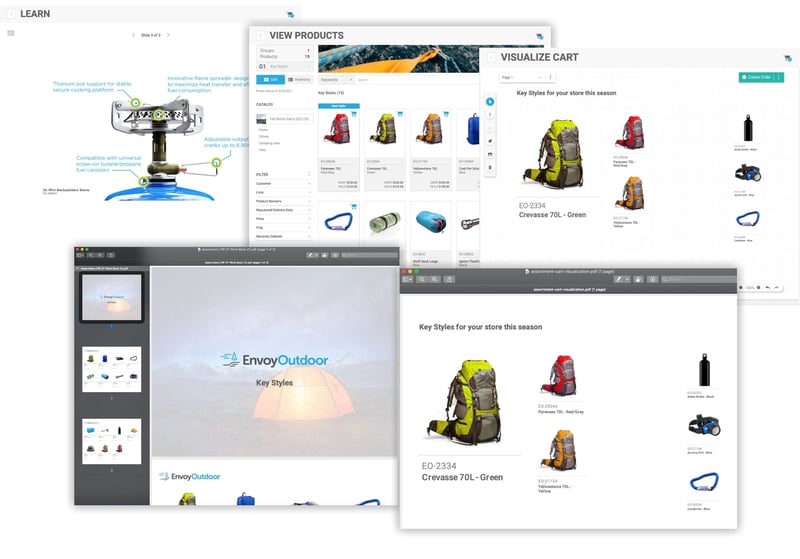
In practice, retail assortment planning includes:
- Selecting SKUs for each category
- Balancing breadth (variety) and depth (inventory levels)
- Aligning price tiers with target customer expectations
- Managing size curves and colorways
- Customizing assortments by region or retailer tier
For wholesale brands, assortment planning is a collaborative process with their retailers, sitting inside the broader merchandise planning process and directly influencing:
- Production forecasting
- Inventory allocation
- Sell-through rates
- Markdown risk
- Overall retail execution
For your specialty retail accounts, relationships and curation matter more than mass-market volume, getting retail assortment planning right can determine whether a season is profitable or ends up heavily discounted.
Why Retail Assortment Planning Breaks Down for Growing Wholesale Brands
As brands scale beyond a handful of accounts, retail assortment planning becomes harder to manage manually. What worked for 20 retailers rarely works for 200.
Let’s say you’re a rep at a trade show, doing line showings all day with your retailers. Marketing has created a product catalog, and your sitting down with a retailer to mark it up, discussing the best assortment for the season. But without a digital catalog that ties into your product data, it’s you to accurately plan with your retailers. You can’t reliably commit to product volumes or give accurate pricing and discounts. That means orders get shorted, and retailers get frustrated with your brand. And on the other side of the meeting your brand lacks visibility into retailer commitments because everyone started planning with inaccurate information on what SKUs are available.
It’s a bad way to start a season, and what should be a collaborative effort turns into confusion and poor sales.
No Real-Time Product Data
When product updates happen mid-season—price adjustments, material changes, revised delivery windows—static PDFs and printed materials don’t reflect those changes.
Retailers end up planning assortments using outdated pricing, incorrect availability, or outdated SKUs, leading to confusion during pre-book ordering and downstream retail execution.
Printed Catalogs with No System Tie-In
Traditional trade show line showings rely on printed catalogs and paper line sheets. Buyers circle products, jot notes, and email follow-ups. After the show sales reps manually enter orders, leading to errors in quantity, sizes, or colorways. Order confirmations and follow ups are delayed due to everyone working across siloed systems, and once trusted retail assortment planning decisions need to be re-verified.
This fragmented workflow slows down and becomes unmanageable, hindering specialty retail distribution, and introducing unnecessary mistakes.
SKU Proliferation Increases Planning Complexity
The problem is compounded by SKU proliferation. Each additional SKU requires its own forecast, inventory parameters, and operational setup across the supply chain. As product counts grow, planning complexity increases and forecasting accuracy often declines.
For brands managing hundreds of SKUs across seasonal collections, retail assortment planning becomes increasingly difficult without centralized product data and structured merchandising tools.
The Role of Digital Catalogs in Modern Retail Assortment Planning
Digital catalogs are more than just marketing tools. They are critical assets that directly support retail assortment planning. It’s essential that they be a living part of your B2B ecosystem, connected to your product data, marketing presentations, and ordering workflow.
.gif?width=1344&height=890&name=2023-01-23_09-09-44%20copy%20(1).gif)
Centralized Product Data That Stays in Sync
A modern digital catalog pulls from a live product database. That means pricing updates reflect across all rep and retailer facing endpoints instantly, SKU changes sync automatically, and iInventory or availability updates stay accurate.For retail assortment planning, this ensures that every sales rep and retailer works from the same data.
Templates That Standardize Seasonal Presentations
As brands expand into more specialty retailers, consistency becomes critical. Digital catalog templates help standardize collection structure, category hierarchy, pricing presentation, and image placement.
This consistency supports better retailer assortment planning conversations by making it easier for buyers to compare categories and evaluate collection balance.
Section-Based Merchandising for Categories and Collections
Digital catalogs allow brands to organize products strategically by category (e.g., outerwear, trail footwear, backpacks), collection (Spring ’26 Alpine Series), price tier, and intended retail channel
This structure mirrors how retailers think about floor sets and seasonal planning. As a result, retail assortment planning becomes more visual and intuitive. The entire process gets easier!
Controlled Visibility for Different Retailers
Not every retailer needs to or should see every product. Segmentation is a mandatory function of your assortment planning process, but it’s impossible to do in a fragmented system. Digital catalogs can support region-specific products and pricing, tier-based access, early previews for key accounts, and specialty retail distribution strategies.
This level of control helps brands manage product segmentation without duplicating materials.
Digital Catalog vs Digital Line Sheet vs Lookbook: What’s the Difference?
Wholesale brands often use these terms interchangeably, but they serve distinct purposes in retail assortment planning.
Digital Catalog
A structured, system-connected presentation tool designed to support retail assortment planning and ordering.
- Organized by category and collection
- Connected to live product data
- Often integrated with a wholesale portal for retailers
Digital Line Sheet
A SKU-level grid listing styles, sizes, pricing, and case packs.
- Highly functional
- Less visual
- Often used as a supporting document during assortment planning retail reviews
Digital Lookbook
An image-driven, brand-focused presentation tool.
- Emphasizes storytelling
- Highlights lifestyle imagery
- Supports sell-in inspiration
In many cases, brands use a digital lookbook to drive excitement, then rely on a digital catalog and digital line sheet to finalize retail assortment planning decisions.
For brands growing their number of specialty retail doors, the digital catalog becomes the operational backbone—bridging inspiration and execution.
How Digital Catalogs Improve Retail Execution
Retail assortment planning doesn’t end at line showing. It impacts everything downstream.
By connecting digital catalogs to ordering systems, your brand can capitalize on integrated workflows and systems that are all talking to each other and pulling from a single source of truth. This leads to improved retailer assortment planning execution in several ways.
Cleaner Pre-Book Orders
Retailers can convert selected SKUs into pre-book orders directly from the digital catalog, reducing manual re-entry, SKU confusion, and pricing errors.
The merchandise planning process becomes more accurate from the start.
Faster Order Processing
Because the catalog is tied to structured product data orders flow directly into wholesale systems, confirmation times decrease, and operations gains visibility sooner.
That supports better production forecasting and inventory alignment.
Improved Specialty Retail Distribution
Digital catalogs help brands manage who sees what—and when.
For your wholesale channels stategies, this means avoiding product overlap across competing retailers, managing regional exclusivity, and protecting premium product tiers.
Retail assortment planning becomes strategic rather than reactive.
From Trade Show Line Showing to Pre-Book Order: A Connected Workflow
Trade shows remain a critical part of the wholesale sell-in process. Research shows that about 81% of trade show attendees have purchasing authority, meaning many assortment decisions are made directly on the show floor.
For brands presenting seasonal collections, this is where retail assortment planning often happens in real time. Buyers work with reps to evaluate categories, review price tiers, and select the products that will appear on their shelves months later.
In this traditional model sales reps present printed catalogs, retailers flip through pages and mark preferred SKUs and take notes on planning. Most of this happens on paper, with buyers often circling core products, highlighting category gaps, or writing notes about size curves. It’s all manual, offline, and none of that planning is happening inside an actionable space.
After returning from the show, sales reps manually enter orders while referencing handwritten notes. It’s a recipe for errors. And the manual nature of it means a delay in pre-book confirmations and execution.
Connecting the Catalog to an Online Wholesale Ordering System
It doesn’t have to be this way though. With a connected digital catalog retailers review collections digitally, making notes right in the catalog that everyone can see and easily reference. They select products directly within the system that then convert into structured pre-book orders. And everyone involved on the brand side - sales reps and operations - can see real-time updates.
When tied to a wholesale portal for retailers, this workflow eliminates duplicate entry and improves retail assortment planning accuracy. Instead of recreating assortment decisions after the show, the system captures them as they happen.
Why Data-Driven Retail Assortment Planning Outperforms Static Planning
For brands selling into specialty retail, poor retail assortment planning creates huge headaches, and has a direct impact on profitability.
Industry research shows that inventory misalignment is one of the biggest drivers of markdown pressure. A survey of U.S. retailers found that misjudged inventory decisions - such as overbuying, buying the wrong products, or misallocating inventory - account for roughly 53% of unplanned markdown costs
Even when inventory does sell, it often requires discounts. Research shows that the average full-price sell-through rate for U.S. retailers is around 60%, meaning a significant portion of seasonal inventory eventually moves at a reduced margin.
For brands, these challenges often originate during retail assortment planning, when product selections, category depth, and seasonal allocations are first defined.
When assortment planning relies on disconnected systems, PDFs, and static catalogs, it becomes far harder to align inventory with actual retail demand.
Data-driven retail assortment planning helps brands:
- Identify high-performing categories
- Balance newness with proven styles
- Adjust regional assortments based on sell-through trends
Digital catalogs play a role by ensuring that assortment planning retail conversations are grounded in accurate, structured product data instead of disconnected files.
Over time, centralized retail assortment planning supports:
- Higher forecast accuracy
- Improved margin protection
- Stronger retailer relationships
How Envoy Supports Retail Assortment Planning with Digital Catalogs
For specialty brands managing complex seasonal collections, catalogs need to do more than look good, they need to be connected to your entire B2B system and a friction-less part of every workflow.
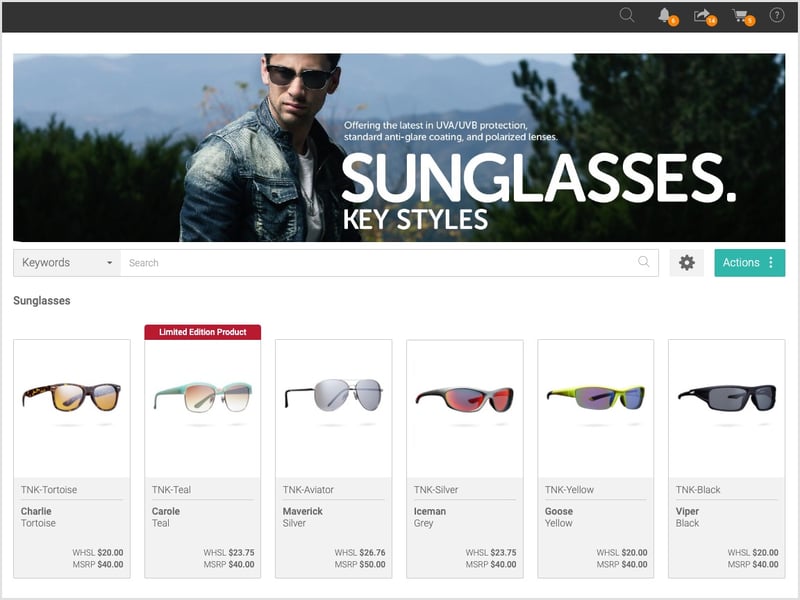
Envoy’s Digital Catalog functionality is designed to support retail assortment planning by:
- Syncing with live product data
- Standardizing seasonal templates
- Organizing collections by category and channel
- Controlling retailer visibility
- Connecting directly to a wholesale portal for retailers
Instead of relying on spreadsheets and static PDFs, brands can manage retail assortment planning within a structured system that supports both sell-in and retail execution.
For brands that are at the tipping point and ready to move beyond manual processes (do this sooner rather than later!), this connected approach helps align sales, operations, and retail partners around one shared source of truth.
Bringing It All Together
Retail assortment planning is one of the most critical processes in specialty wholesale. It determines which products reach the floor, how inventory is allocated, and how profitable a season becomes.
Yet many brands still manage assortment planning retail decisions through disconnected tools like spreadsheets, printed catalogs, and a manual order entry process.
Digital catalogs offer a more modern path that clears the way for your brand to grow.
By centralizing product data, structuring seasonal presentations, and connecting directly to ordering systems, digital catalogs transform retail assortment planning from a fragmented process into a connected workflow with no friction.
Your retail assortment planning can lead to more revenue across stronger seasons if you ditch the disconnected spreadsheets and printed line sheets.